
'The idea behind the new rules is that slaughter markets must buy directly from the farms as is the case in the bloody world.' 'The cattle markets have become centres for the organised beef mafia.'

The revival of the phytosanitary protocol with China is expected to boost tobacco exports to China and prove economically beneficial to Indian farmers.
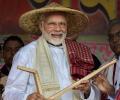
According to Modi, the TMC's 'political syndicate' rules in the land of 'Vande Mataram' and 'Jana-Gana-Mana' and pursues appeasement and vote bank politics.
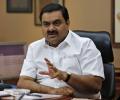
The group companies now lead the market capitalisation league table in sectors such as ports, power generation, gas distribution and transmission, and power transmission and distribution, ahead of incumbents in both public and private sector. This has Gautam Adani family the second wealthiest in business in India.

Here's the full text of President Ram Nath Kovind's customary address to the joining sitting of Parliament on the first day of the budget session.

Agriculture and processed food exports dropped to a five-year low of $24 billion in 2015-16.

Chief Minister Edappadi K Palaniswami and Deputy Chief Minister O Panneerselvam led the strike against the Centre.

Heavy snowfall has shut major cities like New York, New Jersey, Connecticut and Pennsylvania, leaving thousands of travelers stranded in airports across the nation and prompting warnings from officials urging residents to stay off the roads.

Kerala Chief Minister Pinarayi Vijayan dashed off a letter to Prime Minister Narendra Modi, seeking his intervention for repealing the measure. He said the Centre's decision amounts to an "intrusion" to the rights of the states in the country's federal structure.

There will be pressure on the fiscal situation, especially at a time when the monsoon can also disappoint. More populist expenditure is on cards if the mandate is a hung Parliament or a coalition government.
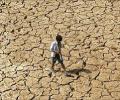
The Budget has stuck to annual increases in agri credit targets.
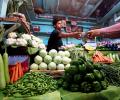
This could be the reason why Prime Minister Narendra Modi mentioned tomato, onion, and potato as his government's 'TOP' priority, in an election rally on February 5 in poll-bound Karnataka.

Onion output dropped to 189.2 lakh tonnes in 2014-15 crop year due to poor rains

No longer Bengal's finance minister, Amit Mitra, Mamata's principal chief advisor, will still advise and aid the 'chief minister and finance department on all matters relating to management of state finance', represent the 'state government in national and international events/meetings/committees' and examine 'important proposals/files and policy issues relating to financial matters referred to him for advice/views'.
A little away from the city in the northern suburbs, vegetables are 15-30 per cent costlier.
Parts of Uttar Pradesh, Haryana, and Punjab have also been impacted.
'In this country, if any government acquires one of these images -- anti-farmer, or anti-poor or corrupt -- the government doesn't survive.' 'The Modi government is fast acquiring that anti-farmer image, that is why it is nervous.'
"Due to the COVID-19 pandemic, its implementation got delayed. But as the situation is slowly improving, the work has started. The rules are now being framed and CAA will be implemented very soon. Under this act all the eligible people will definitely get Indian citizenship," Nadda told the social groups, who included Dalits, Gorkhas, Rajbanshis and other tribes.

The standard line that is used for anyone -- academics, minorities, farmers, dissident industrialists -- who points out that what the government is doing is wrong is being anti-national and separatists, reveals Aakar Patel.

'The government wants farmers to diversify from rice and wheat, and create another green revolution. Cannabis can play a big part in that'

In India, it is markets that sustain the farmers and not subsidies. We are therefore importing a failed model from America.
Farmers have been availing crop loans upto Rs 300,000 at 7%.
In case MGNREGA is expanded, officials said the total expenditure on farming-related works could reach up to 80 per cent of MGNREGA budget, as against the current 67 per cent.
With the gradual opening up of shops, hotels, restaurants and catering services with limited number of participants, milk consumption has improved by 5-10 per cent from the lowest level.

Former Reserve Bank of India (RBI) Governor Raghuram Rajan says the government should take advantage of the peaks in the Indian equity markets right now and sell stakes in PSUs while prioritising spending to get the economy back on track. The upcoming Budget for the fiscal year beginning April 1 should look to provide "relief to the poorer households and small and medium enterprises," he said. And then move on to getting the economy back on track.

Dr Tedros said the team has concluded that leak from the Wuhan Institute of Virology as alleged by former US president Donald Trump is the "least likely hypothesis" but it requires further probe.

Chouhan met some farmer leaders on Saturday, but failed to reach a compromise.

Even though he consults chief ministers at regular intervals, the ultimate decision is still his own. He will be blamed, nobody else, if, god forbid, there is a huge spurt in fatalities after the reopening, notes Virendra Kapoor.

If purists are surprised as to why and how people are not demanding prohibition or not talking about past promises, both in the election manifestos five years back and even those made to the courts, the answer lies in how the state has been evolving and changing these past few years, says N Sathiya Moorthy.

The Great Agriculture Story that propelled Shivraj Singh Chouhan to power just won't sell any longer.

US congressional leaders on trade and finance wrote to the US International Trade Commission calling for a second investigation into India's 'unfair' trade practices, detailing any changes under Modi.
Record sugar output has also yielded molasses production way beyond market demand and plant capacity of state distilleries and country made liquor units
Large stocks were ruined in transit due to thunderstorm and rainfalls in the north and the north-east states, resulting in fewer kilos of potatoes at mandis.
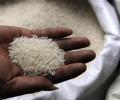
In order to help farmers, the government has increased minimum support price for the last several years. This has made Indian rice uncompetitive for exports.

The country will not allow any "unilateral action" on its border and will pay any cost to thwart such attempts, he told the Bharatiya Janata Yuva Morcha's state conference.

He said farmers need to get good remunerative price for their produce.
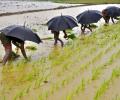
'By 2020 around 34% of India's population will be in the 15-34 age group.' 'More than 70% of them live in rural areas.' 'Their energy and enthusiasm need to be tapped in order to meet their aspirations and transform agriculture and the rural economy,' says P K Joshi.

The Gujarat government believe it can usefully utilise its 1,600-km coast for cultivating more coconuts in the coming years.

Stating that pushing GDP growth, which has slipped to 5-year low of 6.8 per cent in 2018-19, is the top priority, President Ramnath Kovind said Modi govt will bring more reforms and raise farm investments to boost growth.
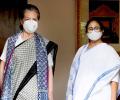
What we have in the Congress is a useful glue to hold a non-cultural, unified Opposition together. That is the sacrifice the Congress must be willing to live with if showing the BJP the door is what the collective Opposition wants, observes Shyam G Menon.
 © 2026 Rediff.com - Advertise with us - Disclaimer - Privacy Policy - Sitemap - Feedback - About us - Terms of use - Grievances